
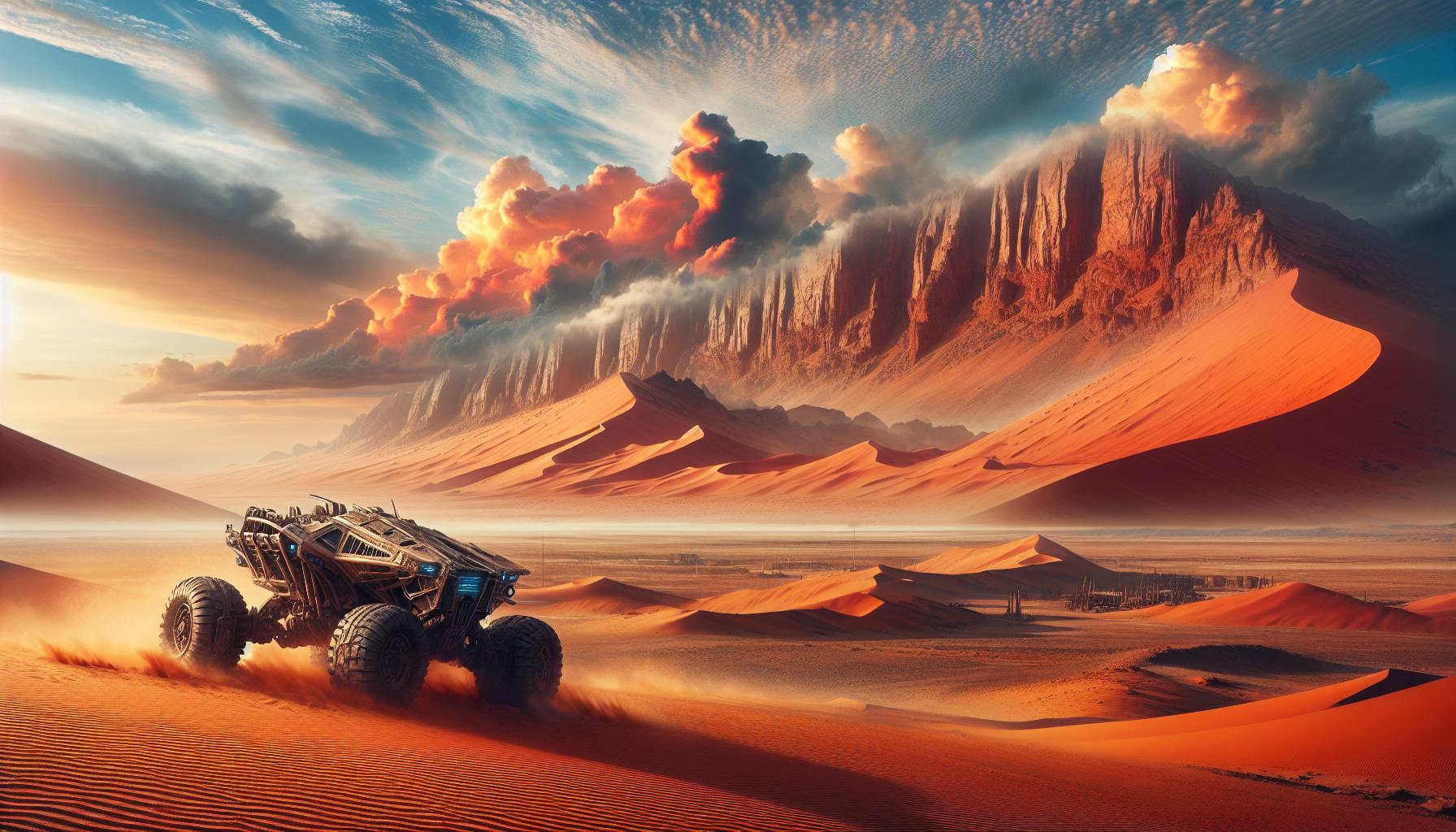
As a die-hard fan of post-apocalyptic cinema, I’ve always been fascinated by the stunning landscapes in Mad Max: Fury Road. This high-octane action masterpiece, released in 2015, showcases some of the most breathtaking desert scenery ever captured on film.
While many assume the movie was filmed in Australia like its predecessors, Fury Road actually took an unexpected turn in its filming location. I’ll take you behind the scenes of this epic production that transformed barren wastelands into the perfect backdrop for Max Rockatansky and Furiosa’s intense journey. The film’s unique shooting locations played a crucial role in creating the movie’s distinctive post-apocalyptic atmosphere that captivated audiences worldwide.
Key Takeaways
- Mad Max: Fury Road was primarily filmed in Namibia’s Namib Desert, not in Australia as originally planned due to unexpected rainfall at the initial Broken Hill location.
- The film utilized 37 distinct locations across Namibia’s Dorob National Park, including Swakopmund Dunes, Skeleton Coast, and Moon Valley, spanning 150 kilometers of desert terrain.
- The production established a massive base in Swakopmund, featuring a 4,500-square-meter vehicle workshop where 150 craftsmen transformed 150 vehicles into post-apocalyptic machines.
- 90% of the film’s spectacular sequences used practical effects rather than CGI, including 150 real vehicle stunts and 80 vehicle crashes.
- The challenging desert environment presented extreme conditions with temperatures reaching 122°F (50°C), requiring extensive logistical planning and daily transport of 2,000 gallons of water.
The Search for the Perfect Desert Location
Director George Miller’s quest for the ideal filming location led to unexpected challenges that transformed the movie’s visual landscape.
Original Filming Plans in Australia
The initial production plans centered on Broken Hill, Australia, a remote mining town in New South Wales. Production crews constructed elaborate sets in 2011 but faced an unprecedented obstacle when heavy rainfall turned the arid desert into a blooming flower field. The unusual weather patterns created lush greenery across the landscape, making it impossible to capture the stark post-apocalyptic aesthetic essential for the film.
Moving Production to Namibia
The relocation to Namibia’s Namib Desert emerged as the optimal solution in 2012. The Namib Desert offered:
- 5 months of guaranteed sunshine with predictable weather patterns
- 37 distinct filming locations across the Namib Desert
- 1,000 crew members relocated to the coastal town of Swakopmund
- 150 kilometers of accessible desert terrain for vehicle stunts
The Dorob National Park region provided the perfect backdrop with its:
- Orange-red sand dunes reaching heights of 300 meters
- Expansive salt flats at the Namibian coast
- Rocky outcrops ideal for chase sequences
- Minimal vegetation interfering with the dystopian aesthetic
These environmental conditions matched Miller’s vision for a harsh post-apocalyptic world, delivering the unforgiving landscape that became synonymous with Mad Max: Fury Road’s visual identity.
Inside Namibia’s Dramatic Landscapes
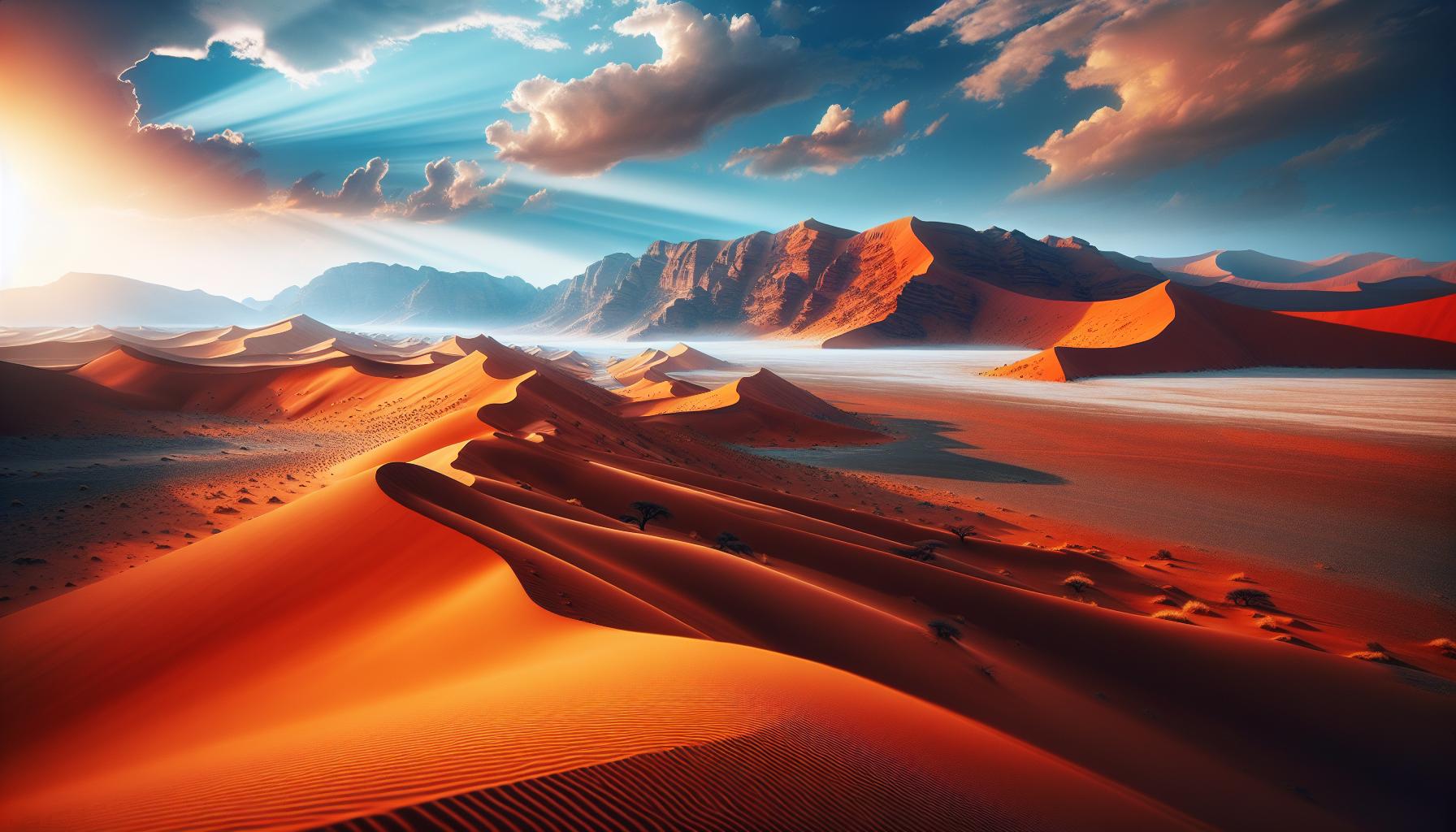
The Namib Desert’s otherworldly terrain transformed Mad Max: Fury Road into a visceral post-apocalyptic experience. I’ve researched the specific locations that created the film’s distinctive visual aesthetic.
The Namib Desert as The Wasteland
The Namib Desert stretches 1,200 miles along Africa’s southwestern coast, featuring towering dunes rising 1,000 feet high. Its dramatic orange-red sand formations create stark contrasts against the pale blue sky, perfectly matching the film’s apocalyptic atmosphere. The desert’s harsh conditions mirror the fictional wasteland through its extreme temperatures (reaching 113°F), minimal rainfall (less than 0.39 inches annually) and vast salt pans.
Key Filming Sites in the Region
The production team utilized multiple distinctive locations across Namibia’s Dorob National Park:
- Swakopmund Dunes served as the primary backdrop for the high-speed chase sequences
- The Skeleton Coast’s bleached landscapes created the toxic wasteland scenes
- Brandberg Mountain’s granite peaks appeared in multiple background shots
- Moon Valley’s ancient rock formations hosted several vehicle stunts
- Henties Bay Road provided 25 miles of uninterrupted desert highway for convoy scenes
| Location | Distance from Base | Filming Duration |
|---|---|---|
| Swakopmund | 0 miles (base camp) | 84 days |
| Skeleton Coast | 75 miles | 32 days |
| Moon Valley | 18 miles | 28 days |
| Brandberg | 125 miles | 15 days |
| Henties Bay | 42 miles | 25 days |
Building The Post-Apocalyptic World
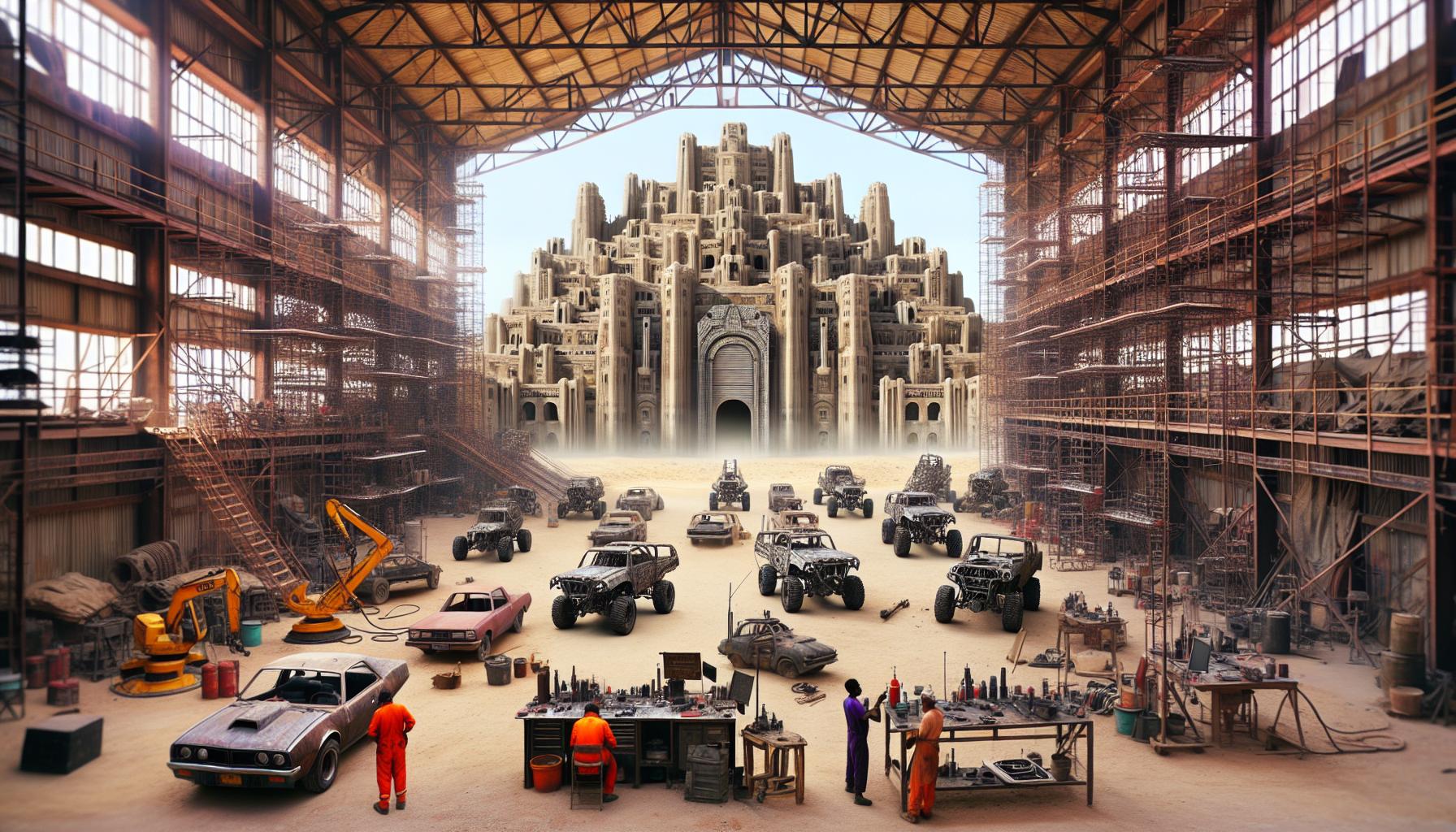
The production team established a massive operational base in Namibia’s port city of Swakopmund to construct the film’s distinctive visual elements. This hub served as the central location for creating vehicles custom vehicles sets that defined Mad Max: Fury Road’s unique aesthetic.
Custom-Built Vehicle Workshop
The production team converted an abandoned warehouse in Swakopmund into a fully operational vehicle workshop spanning 4,500 square meters. Master mechanic Mark McKinley led a team of 150 craftsmen who transformed 150 vehicles into post-apocalyptic war machines over 12 months. The workshop contained:
- Specialized welding stations for modifying vehicle chassis
- Custom paint booths for weathered metallic finishes
- Fabrication areas for creating unique vehicle attachments
- Testing grounds for mechanical modifications
- Storage bays housing spare parts salvaged from local junkyards
Constructing The Citadel Sets
Production designer Colin Gibson created The Citadel’s massive practical sets in Swakopmund’s industrial district. The construction encompassed:
- Three 62-foot-tall sandstone buttes built from steel scaffolding
- Functional water cascade system pumping 12,000 gallons
- Vertical farm structures with working irrigation systems
- Network of practical elevators powered by counterweights
- Living quarters crafted from shipping containers
| Resource | Quantity |
|---|---|
| Steel scaffolding | 180 tons |
| Concrete foundation | 1,200 cubic yards |
| Construction crew | 200 workers |
| Build time | 8 months |
| Set footprint | 15,000 square feet |
Filming Challenges in the Desert
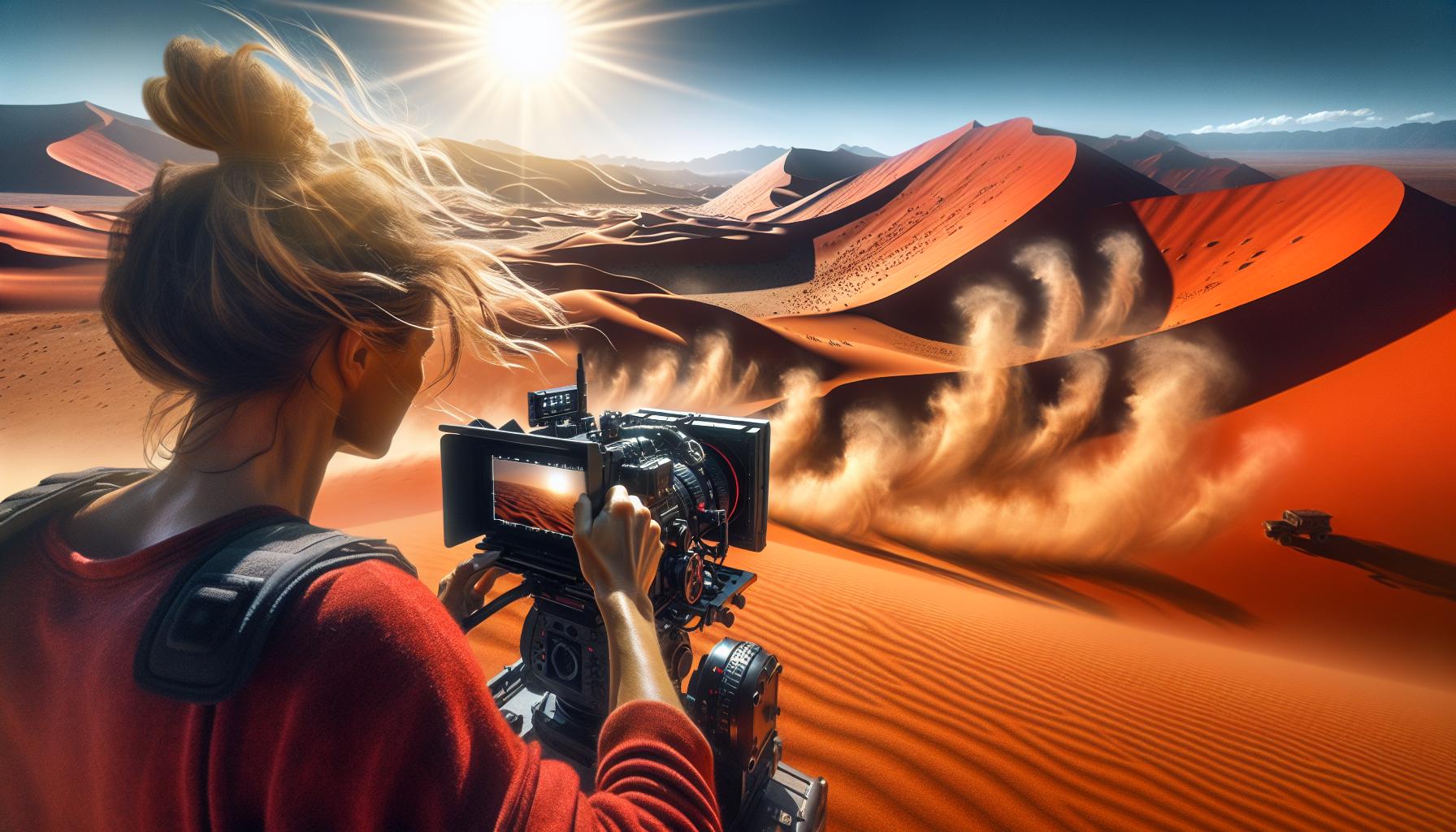
The Namib Desert’s harsh environment created significant obstacles during Mad Max: Fury Road’s production. The extreme conditions tested the limits of both crew members and equipment throughout the 120-day shooting schedule.
Extreme Weather Conditions
The film crew battled temperatures reaching 122°F (50°C) during daytime shoots in the Namib Desert. Dust storms frequently swept through filming locations, reducing visibility to 10 feet and damaging sensitive camera equipment. The production team implemented a three-layer protection system for cameras, including sealed housings, UV filters and custom-built sandproof cases. Daily temperature fluctuations of up to 68°F (20°C) between day and night shoots required constant equipment recalibration.
Logistical Hurdles
Coordinating the movement of 150 vehicles, 1,000 crew members and equipment across remote desert locations demanded precise planning. The production team:
- Established five mobile base camps with medical facilities, water storage tanks and repair workshops
- Built 200 miles of temporary access roads to reach isolated filming locations
- Transported 2,000 gallons of water daily for crew consumption and vehicle maintenance
- Created an on-site vehicle repair facility with 50 mechanics to handle daily maintenance
- Maintained a fleet of 20 support vehicles to shuttle crew and equipment between locations
- Installed temporary communication towers to maintain contact across the vast desert expanse
The geographic isolation meant spare parts took 7-14 days to arrive from suppliers, requiring the team to stock extensive backup equipment and redundant systems. Remote location challenges included limited cell service, absence of permanent structures and distances of up to 100 miles from the nearest town.
Special Effects and Location Shooting
Mad Max: Fury Road achieved its distinctive visual style through a revolutionary blend of practical effects and minimal CGI, setting new standards for action filmmaking in natural locations.
Practical Effects vs CGI
Practical effects dominated 90% of Mad Max: Fury Road’s spectacular sequences. The production team executed 150 real vehicle stunts, orchestrated 80 vehicle crashes, and created genuine explosions using over 180 specialized explosive devices. Key practical effects included:
- Custom-built pneumatic rigs for vehicle flips
- Mechanical arm extensions for the pole-swinging War Boys
- Physical flame-throwing devices mounted on vehicles
- Rotating camera platforms attached to specialized pursuit vehicles
- Practical dust storms generated by modified aircraft engines
Digital effects served only to enhance practical elements:
- Weather enhancement in 35% of shots
- Digital wire removal in stunt sequences
- Crowd multiplication for large-scale scenes
- Color grading to achieve the signature orange-tinted palette
Stunt Coordination on Location
The stunt team coordinated 150 distinct action sequences across Namibia’s challenging terrain. Key elements included:
- 78 specialized stunt performers working in rotating teams
- 150 safety supervisors monitoring each major sequence
- Custom-built hydraulic rigs installed at 12 key locations
- Mobile medical units stationed at 200-meter intervals
- Real-time communication systems linking 85 vehicles simultaneously
Location-specific safety protocols included:
- Three-tier backup systems for vehicle malfunctions
- GPS tracking devices on all stunt vehicles
- Pre-staged emergency response teams at critical points
- Daily equipment checks in extreme desert conditions
- Specialized sand driving training for all stunt performers
- 14 specialized camera vehicles
- 28 dedicated safety vehicles
- 35 stunt riggers
- 42 effects technicians
- 65 mechanical support staff
Conclusion
The relocation of Mad Max: Fury Road’s production from Australia to Namibia proved to be a blessing in disguise. I’ve shown how the Namib Desert’s dramatic landscapes breathtaking dunes and harsh conditions created the perfect backdrop for George Miller’s post-apocalyptic vision.
The film’s commitment to practical effects combined with the natural beauty of Namibia created an authentic and immersive experience that wouldn’t have been possible elsewhere. I believe the challenging filming conditions and innovative production methods have set a new standard for action filmmaking while cementing Mad Max: Fury Road’s place in cinema history.
